

How to research as a hobby, the right way?
When I graduated college, I felt the urge to continue learning. I replaced the time I spent reading recommended theses from my professors with video essays. The thought of researching the video essays I enjoyed watching never seemed to cross my mind until recently. I had to ask myself: if I was willing to watch 30 minutes of fashion history, was I willing to go down my own rabbit hole for 3 hours? Yet the thought of having to search for my own sources brought back the fear I felt when choosing references for an essay in academia. There had to be a way to enjoy the search rather than fear it in adulthood. How could I enjoy researching my curiosities without the structure of academia?

Pexels image by Tima Miroshnichenko
I had to think back to what worked. Why was essay writing so enjoyable? My favorite essay to date is titled What Do You Do When God is Gaslighting You? I wrote my thesis based on a section of Paradise Lost by John Milton. My professor never gave me a specific direction on what to write about. Themes were apparent in lectures, but it was up to me to choose which themes I wanted to explore and what section I believed portrayed them.
Essay writing in college and high school was never a challenge for me. I never received a failing grade on an essay. I enjoyed expressing my ideas about the novels and articles that were assigned. I was challenging my own perceptions and thoughts in seminar circles with classmates. It’s an interesting place to be when someone brings evidence to the discussion that completely disrupts your assumptions. In academia, we were all forced to read the same novel but never to have the same ideas. I missed those conversations, and now I was forced to have them only with myself.
Finding a Topic
Topic searching is the hardest part. In college and high school, you never had to choose. Your readings and curriculum were finalized by administrators. They curated what themes they wanted to explore and how you would explore them.
As adults in the world, we have everything at our disposal. The freedom is overwhelming. You may find yourself at a standstill with your thoughts, emotions, interests, but researching as a hobby is akin to writing a paper. Fortunately, there is no thesis needed. Instead, you have to question everything. One question will essentially lead you to another and then another. From there you can naturally fall into the spiral of obsession with your topic. Once the spiral starts, you can lose yourself in it.
The first step is to think about what you want to have a conversation about. What is something that has been bothering you? What has been on your mind? Is there a video you’ve seen online that you are still thinking about? Not every question needs to feel traditionally “researchable.” You can take this time to question your own emotions and how you take up space.
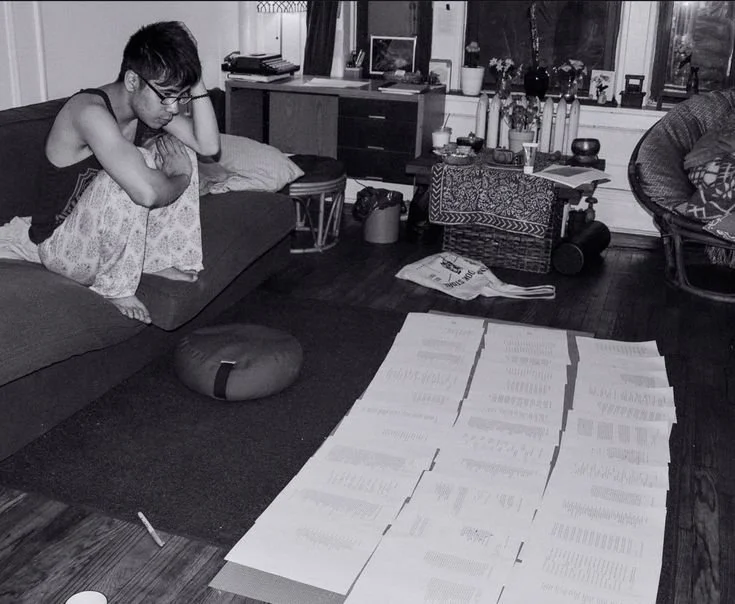
Image of Author Ocean Vuong
This may sound boring, but I’m really interested in the deconstruction of labor unions and how that shift has pushed society toward more individualistic goals. Even more so, it is interesting to see how protests of the past and present can be similar. Are the protests we see today a representation of how we are coming together as a nation even as polarization deepens? Has polarization decreased? How do our political views flow into our identities and actions? Are actions separate from identity, or do our actions shape our identity? You can see I started spiraling here. This is what I like to call conventional research.
We often think about history when we think about research, but it really is just investigation. It’s having a question and finding the answer. You can research anything and everything. Take a look at video essays; they offer a wide range of insight into topics I never thought were possible.
Social Media & News
YouTuber Big Tugg made a video on the importance of Shrek in pop culture and how its success impacted the movie industry’s definition of “kid friendly.” My next video selection was on adult themes in children’s media. I thought back to movies I watched as a child and how it felt to rewatch them as an adult. As I rewatched these movies, I did not take issue with the adult themes. Many of them were subtle and would never be received by a child. When I was a child, I did not notice. But I started to think about the times I did notice very sexual themes in the media I consumed as a child. Had exposure to adult themes impacted my actions as an adult? Naturally, I wondered how adult themes were introduced into children’s media and why.
Think about what kind of media you focus on. Look at your watch history. Take note of your likes. What are the topics you find yourself watching or stopping the scroll for? Being mindful of your existing interests can start your spiral.
Don’t be afraid to ask questions about books, art, fashion, and movies. Make space for questions on society and the environment around you. Pop culture itself is a spiral that is everlasting. Once you’ve found a question through social media or pop culture, the next step is finding places to explore it more deeply.
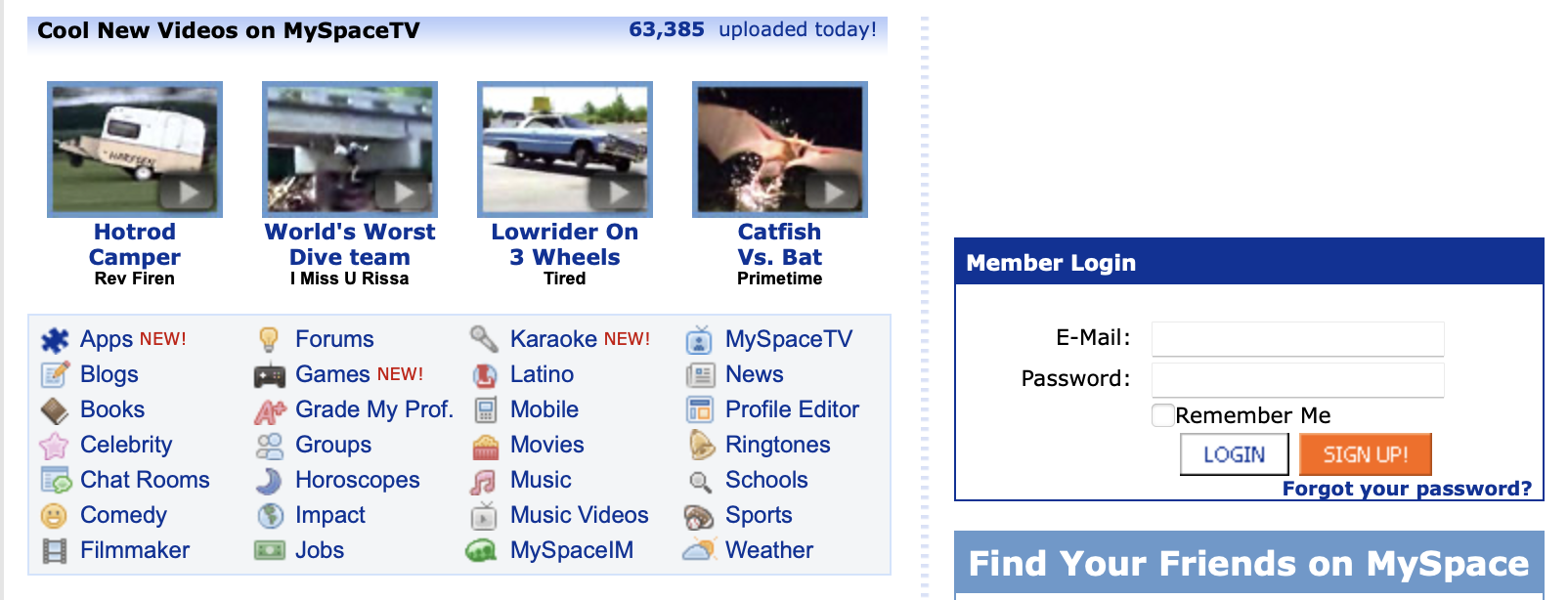
Internet Archive is also a great resource for spiraling. Since the birth of the internet, everyday people have been uploading a digital library. You can scroll through Myspace and Instagram from 2007. I highly recommend browsing to see what unexpected media you might find.
So, what do you have questions about?
Finding Structure with College Courses
You don’t need to be in college to have access to college syllabi and lectures. Every college will have a breakdown of its courses. I usually start with the college I attended or the free Yale and Harvard classes for my picks.
Take time to search through a course category that you find of interest. Many professors in literature, history, psychology, and philosophy will have the course reading lists posted on the course site. If you find yourself not knowing where to start, this is a great way to have structure and guidance without having to pay thousands of dollars for it.
If you are looking to get into classics like Dante’s Inferno with some direction, Yale has a free open course with lectures that can guide you through Dante’s circles of hell.
The History of It All
History is the most interesting place you will find yourself when researching a topic. I think about how my English teachers would spend weeks on the history of our quarterly readings. My teachers took the time to set the scene. They discussed the historical context in which the authors wrote their novels. The intent of an author’s writing was presented as we came to our own conclusions about the intentions of the author.
I still remember the lessons from Upton Sinclair’s The Jungle . My teacher smirked as she asked us what we thought the title meant before she handed us the books. I thought the book was about a boy, in the jungle, with a bear. The classroom filled with disgusted faces as she told us the history of Chicago’s meatpacking industry. At the end of our reading, we were asked how we felt about the book.
I was appalled when my teacher told us Sinclair’s intent and the result of his writing. Sinclair wanted to shed light on the struggles of families during Chicago’s golden era. He was a journalist turned author. When the novel was released, people were more concerned about what they were eating than the people involved in the process. The Food and Drug Administration (FDA) was created, but no social reforms followed.
When we start to ask why, things get interesting. In researching history, I find it surprising to know who or what company was involved. Did you know that Listerine’s mouthwash was once a floor cleaner?
All that to say, I recommend the history section of Wikipedia when researching. Don’t forget to take the time to click the links.
Other People’s Opinions
Google Scholar is about to be your best friend. The deeper you dive into your topic, the more you become curious about what other people thought. We have all accidentally spoiled a book by reading the reviews all too early. Every idea you explore has likely been examined from multiple angles. Discovering new perspectives can completely reshape how you see your own opinions.
Google Scholar helps you filter out the noise of blogs and sensational news articles and brings you straight to credible, thoughtful sources. Many of the results on Google Scholar will be from academic journals, university research papers, and professional publications. This allows you to see what the professionals are saying.
How to Search Effectively
When you are searching for your topic you do not want to put your full question in the search bar. It works best if you use keywords related to your topic. You want to be as general as possible using only about three words in the search bar. If you are looking to research the social impacts of color TV you may search the following to get the best results:
What were the social impacts of color television in the 1950s?
color televison
introduction of color television
impact of color television
television in the 1950s
Article Paywalls
Researchers want to get paid, so you will come across a paywall. If you are not a university student, you can use browser extensions like Unpaywall or Open Access Button to check your public library's databases to get free access to academic journals. Another option is to email the author directly for a PDF. The best option is to search repositories like preprint servers or PubMed.
If you are looking for something casual, your best bet is going to be good ol’ Reddit. Reddit is great for hearing what real people have to say.
Between the two, you get a balanced mix of formal knowledge and genuine human opinion.

Follow the References
One of the most overlooked parts of research is the reference section—and it’s often where the real treasure is hiding.
Every research paper you read on Google Scholar will include a list of sources at the end. Those citations are essentially a roadmap showing you exactly where the author found their information. Wikipedia works the same way, with references linked throughout the article and collected at the bottom of the page.
Instead of stopping at one article, take the time to follow those citations. Click through them. Track down the original studies. See where those sources lead you. You might discover older foundational texts, related studies, or entirely new directions to explore.
This process turns research into something more like a journey than a checklist. One source leads to another, which leads to another, until you’ve built a web of understanding that goes far beyond your original starting point. The more you follow the trail, the clearer the bigger picture becomes.
In the end, learning on your own terms should feel fulfilling rather than stressful. Research outside of academia is not about perfect structure or polished arguments—it’s about curiosity. Allow yourself to wander, to take messy notes, and to follow questions wherever they lead. You can organize your thoughts later. The joy is in the spiral.
